

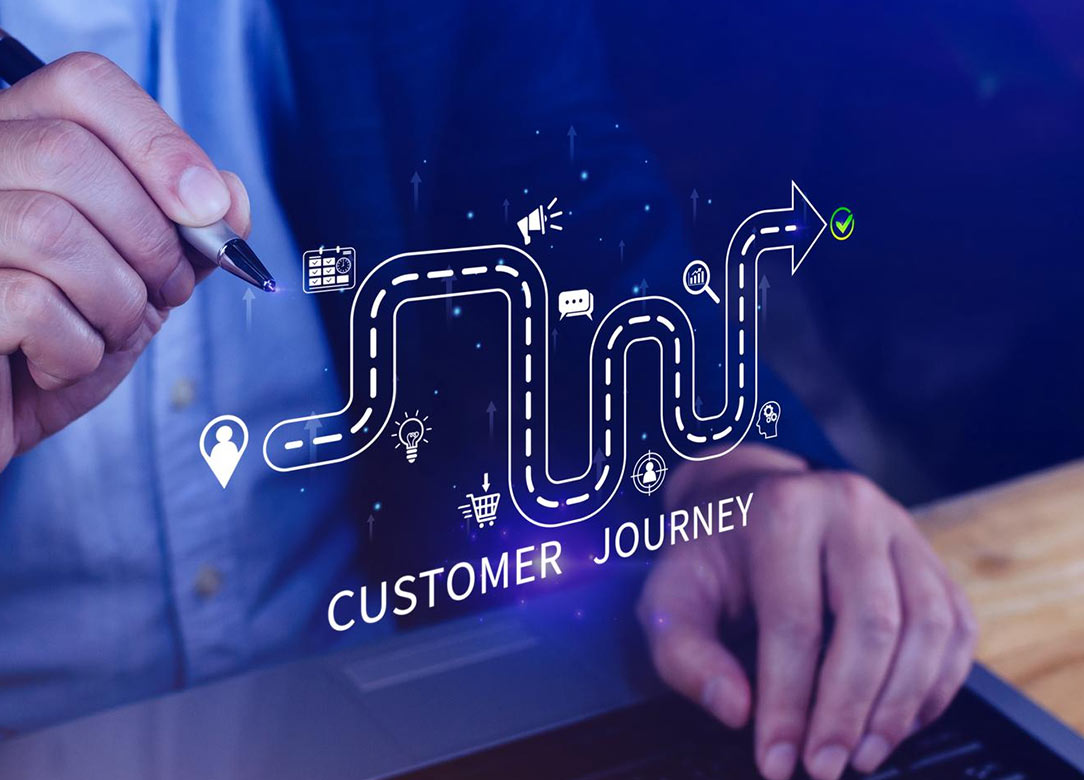
Key Takeaways
- Unlike legacy campaign tools, Adobe Journey Optimizer (AJO) uses a single customer profile to trigger personalized interactions in milliseconds based on live behavior.
- Built natively on Adobe Experience Platform (AEP), AJO acts as a robust customer journey optimizer by connecting CRM, web and offline data to drive consistent omnichannel journeys.
- The availability of AI Agents allows teams to automate journey creation and audience discovery with “agentic” reasoning and predictive modeling.
- Marketers can manage 1:1 experiences for millions of customers from a single canvas, reducing IT dependency and accelerating time-to-market.
- By unifying inbound and outbound touchpoints, AJO ensures customers remain engaged but never overwhelmed by redundant communications.
In the modern digital economy, the “journey” is no longer a linear path from awareness to purchase.
It’s a fragmented series of micro-moments happening across multiple devices simultaneously. For most organizations, the challenge isn’t a lack of data. It’s the inability to act on that data fast enough to matter.
What is Adobe Journey Optimizer?
To understand its value, we need to answer a fundamental question: What is Adobe Journey Optimizer?
At its core, AJO is an agile, scalable application built natively on the AEP designed to orchestrate and deliver personalized, connected and timely customer experiences across any app, device or channel.
While traditional marketing automation platforms focus on scheduled batch campaigns, AJO is built for the “always-on” customer. It allows brands to listen for signals such as a price drop, a flight delay or a cart abandonment and respond instantly with a message that’s contextually relevant. By integrating AJO into a composable tech stack with AEM, businesses ensure every touchpoint is powered by real-time intelligence.
Unified data: The foundation of every journey
The secret to why AJO excels as a customer journey optimizer lies in its foundation. Most marketing tools operate on their own data “islands,” leading to disconnected experiences.
AJO, however, draws from a Real-Time Customer Profile that’s continuously updated as new data flows in from:
Digital signals. Web clicks, app interactions and email engagement.
Offline events. In-store purchases, call center logs and loyalty program updates.
B2B accounts. With the AJO B2B Edition, organizations can now orchestrate journeys for entire buying groups, not just individuals.
This unified view prevents “marketing fatigue” and ensures your AEM implementations deliver better ROI by activating content only when it’s most likely to convert.
The role of AI Agents in orchestration
A major evolution in 2025 is the move toward Agentic AI. Adobe has announced the general availability of specialized AI Agents that assist marketers in complex tasks that previously required manual effort.
| AI Agent Type | Primary Function | Business Value |
| Audience Agent | Conversational audience exploration. | Detects duplicates and identifies high-value segments instantly. |
| Journey Agent | Goal-based journey orchestration. | Recommends optimal touchpoints and identifies friction points. |
| Experiment Agent | Automated A/B testing analysis. | Accelerates time to statistical significance for optimization. |
These agents allow teams to strengthen AEM operations by moving away from “if-this-then-that” logic. Instead, you define a goal such as “increase repeat purchases by 15%” and the AI Agent helps architect the path.
Traditional logic isn’t out the window, but the ability to reason through context changes everything.
Mastering the omnichannel canvas
AJO provides a visual, drag-and-drop canvas that harmonizes two traditionally separate worlds: Scheduled Campaigns and Triggered Journeys.
Unitary Journeys (1:1). These are triggered by specific events. If a loyalty member enters a store, AJO can instantly send a push notification with a personalized offer based on their last web search.
Batch Campaigns (1:Many). These are scheduled promotional events. AJO ensures these don’t conflict with active 1:1 journeys by applying frequency capping.
This coordination is vital for AEM team alignment. When the creative team updates a modular component in AEM, the customer journey optimizer can immediately serve that new content across email, SMS, push notifications and web experiences.
Strategic use cases for 2026
To truly improve AEM efficiency, organizations are leveraging AJO for sophisticated scenarios:
The proactive travel assistant. A travel brand uses AJO to monitor flight statuses. If a delay occurs, AJO automatically triggers a push notification offering lounge access or a hotel voucher.
The post-purchase concierge. After a high-end electronics purchase, AJO triggers a series of personalized “getting started” tips followed by a maintenance offer three months later based on the specific model.
B2B buying group journeys. Instead of bombarding a single lead, AJO B2B Edition tracks engagement across an entire account. If a decision-maker views pricing, the system can trigger an executive summary for the CFO and technical specs for the IT manager.
Real use cases like these separate the platforms that feel helpful from the ones that feel invasive.
The future of experience orchestration
The goal of AJO is to make customer interactions feel less like “marketing” and more like a helpful, intuitive service. By bridging the gap between data silos and creative assets, AJO allows brands to meet customers exactly where they are in the moment, on their preferred device.
As AI Agents continue to evolve, the barrier between a great idea and a live customer journey will only get smaller. Organizations that embrace this real-time orchestration today will be the ones that own the customer relationship tomorrow.
Ready to elevate your customer journeys? Contact NetEffect today to see how we can help you integrate AJO into your digital strategy.
Frequently Asked Questions
Adobe Campaign excels at high-volume, cross-channel batch marketing and lead management. In contrast, AJO is purpose-built for real-time, 1:1 orchestration on the AEP, reacting to live signals in milliseconds.
Yes. AJO requires the Adobe Real-Time Customer Data Platform (RTCDP) or the underlying AEP. It needs this centralized “source of truth” to understand who the customer is and what they’re doing right now across all touchpoints.
AJO natively supports email, SMS, push notifications, in-app messages and web experiences. Through “Custom Actions,” it can also trigger third-party systems like direct mail partners or social media platforms.
AI Agents act as a reasoning engine. Instead of manually configuring every audience and path, marketers use conversational prompts to have the AI Agent build drafts, detect conflicts and recommend content based on predictive modeling.
Yes. With the AJO B2B Edition, the platform orchestrates journeys for “Buying Groups” and “Accounts” rather than just individual profiles, aligning marketing and sales efforts for account-based marketing (ABM).